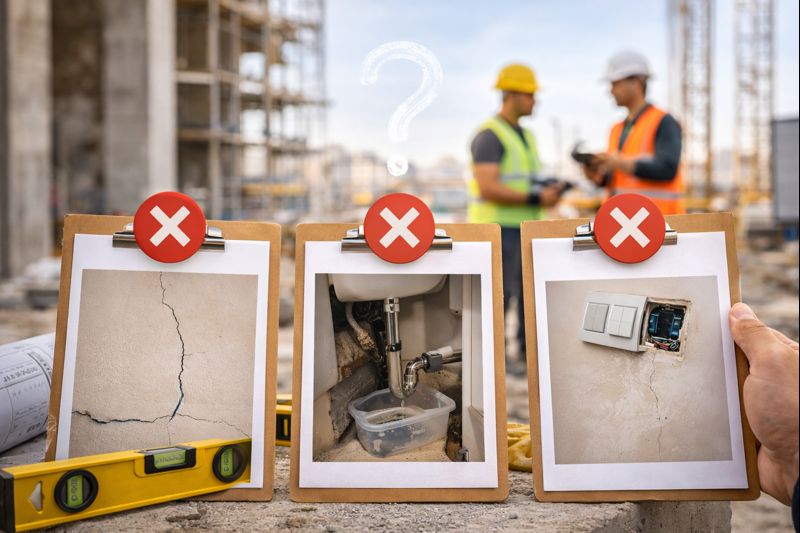
Why Real-Time Defect Logging Improves Project Handover Quality
“Handover quality” is not decided on the final day. It’s the result of hundreds (sometimes thousands) of defects being captured, assigned, fixed, and verified over time. When defect logging is delayed—written on paper, typed later, or shared through messages— projects suffer from missed items, rework, disputes, and rejected closures.
Real-time defect logging means defects are captured as they are found, with the details needed to close them: accurate location, clear description, photos/markups, priority, and ownership. That simple shift improves handover quality dramatically.
What is real-time defect logging?
Real-time defect logging is the practice of recording defects directly on site during an inspection, using a structured digital workflow. Each defect is logged with the information required to take action immediately—without waiting for post-inspection data entry.
- Location: Block → Floor → Unit/Room → Zone
- Description: What is wrong + what “done” looks like
- Evidence: Photos and markups to remove ambiguity
- Priority: Critical/High/Medium/Low (or your project standard)
- Ownership: Responsible contractor/trade/team
- Status: Open → In Progress → Fixed → Verified → Closed
The fastest handovers happen when defects are logged with enough clarity to be fixed without a phone call.
Why real-time logging improves handover quality
1) Fewer missed defects
Paper notes and end-of-day typing increase the chance of missing items. Real-time logging captures defects immediately, while the inspector is at the exact location. That reduces omissions and improves handover completeness.
2) Faster rectification cycles
When defects are logged instantly, contractors can start rectification earlier. Waiting for “the report” wastes days. Real-time logging shortens the gap between inspection and action—critical during closeout.
3) Clearer accountability
Many defects remain open because ownership is unclear. Real-time workflows assign the responsible contractor or trade immediately, so each defect has an owner and a clear next step.
4) Better evidence, fewer disputes
Photos plus markups remove ambiguity. Instead of arguments about which wall or which unit the defect refers to, evidence makes it obvious—improving acceptance rates during verification and reducing repeated inspections.
5) Stronger reporting and traceability
Handover documentation should prove what was found, when it was found, what was fixed, and what was verified. Real-time logging creates a clean audit trail with statuses and timestamps, improving credibility with clients and consultants.
Real-time logging vs delayed logging (what changes in practice)
- Delayed logging: notes on paper → typed later → photos matched manually → reports sent late
- Real-time logging: defects captured on site → evidence attached → owners assigned → progress tracked live
Best practices for real-time defect logging on site
- Use a consistent location hierarchy (Block → Floor → Unit/Room → Zone)
- Capture at least one context photo + one close-up for small defects
- Use markups for chips, cracks, misalignment, sealant gaps, and finish defects
- Apply a simple priority system and define what “critical” means
- Assign ownership immediately to avoid “floating” defects
- Verify closures with evidence and status workflow (Fixed → Verified → Closed)
How SnagBricks supports real-time defect logging
SnagBricks is designed for real-time snagging and defect tracking. It helps teams log defects on site with structured details, attach photos and markups, assign ownership, track statuses, and export professional PDF/Excel reports for handover.
- Structured defect capture with locations and categories
- Photos + markups to reduce disputes
- Ownership, priorities, and status tracking
- Fast PDF/Excel export for clients and contractors
Download SnagBricks for Real-Time Defect Logging
Capture defects on site with photos and markups, assign issues instantly, track closure, and export handover-ready reports in minutes.