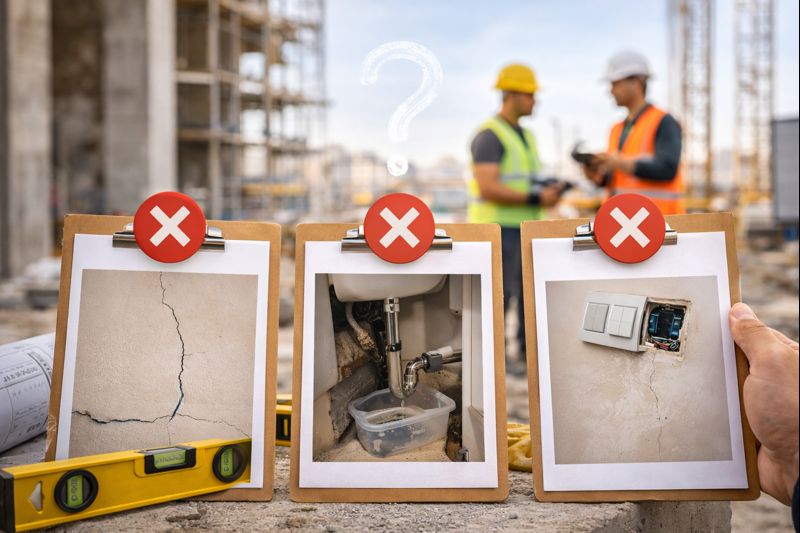
Snag Lists vs Punch Lists: A Practical Checklist
If you’ve managed project closeout, you’ve probably heard both terms: snag list and punch list. In practice, both refer to a list of incomplete work, defects, or deviations that must be corrected before final sign-off. But the terms are often used differently depending on region, client, contract, and stage of the project.
This guide gives a practical, site-ready checklist you can use to decide which list you need, how to structure items properly, and how to get faster closures with fewer disputes.
Quick definitions (in plain terms)
What is a snag list?
A snag list is typically used in the UK, Middle East, and Commonwealth markets. It commonly refers to defects and incomplete items found during inspections—especially in finishing stages—before handover.
What is a punch list?
A punch list is commonly used in the US and parts of North America. It usually refers to a formal list of incomplete or non-conforming work that must be resolved before substantial completion or final completion.
In most projects, snag lists and punch lists are functionally the same: a clear, actionable list of items that must be fixed and verified before handover.
Snag list vs punch list: the practical differences
1) Terminology and geography
- Snag list: commonly used in UK, UAE, KSA, India, and many international projects.
- Punch list: commonly used in US and contract-driven closeout environments.
2) Project stage
- Snag list: often used throughout finishing phases and pre-handover inspections.
- Punch list: often tied to milestone completion (substantial completion / final completion).
3) Formality and contractual context
- Snag list: can be informal or formal depending on the client/consultant.
- Punch list: more often appears in contract processes with sign-off requirements.
A practical checklist: which list should you use?
Use this checklist to decide what you’re building and how to run it on site.
Use a Snag List when:
- You’re running inspections during finishing stages (paint, tiles, joinery, doors, ceilings).
- You need rapid capture and quick closure cycles by location (unit-by-unit or floor-by-floor).
- Your team uses the term “snagging” for defect management and handover readiness.
Use a Punch List when:
- The contract explicitly defines a punch list process for completion milestones.
- You need a formal closeout deliverable tied to substantial completion or final completion.
- The client/consultant expects a punch list sign-off workflow.
How to write a good snag/punch item (the template)
Whether it’s called a snag or a punch item, the format should be consistent. Each item should be actionable without a call. Use this structure:
- Location: Block → Floor → Unit/Room → Zone (plus drawing/grid reference if available)
- Title: short defect name (e.g., “Tile hollow sound near shower drain”)
- Description: what is wrong + what “done” looks like
- Evidence: photos + markups (wide + close-up)
- Priority: Critical / High / Medium / Low (define critical)
- Ownership: contractor/trade responsible
- Status: Open → In Progress → Fixed → Verified → Closed
Common categories to include in your checklist
A practical checklist works best when items are tagged consistently. Typical categories include:
- Finishes: paint, plaster, tile, sealant, joinery, doors/hardware
- MEP: electrical outlets, lighting, plumbing leaks, HVAC balancing, alarms
- Civil: alignment, cracks, slopes/drainage, waterproofing, concrete defects
- Safety/Compliance: guards, signage, fire stopping, accessibility items
- Commissioning: testing, documentation gaps, operational readiness
How to close items faster (without re-inspections)
1) Capture better evidence
- Take a wide photo (context) + close-up (detail).
- Use markups for small defects (chips, cracks, gaps, alignment).
- Write the expected fix clearly.
2) Assign ownership immediately
A list without owners becomes a “shared problem.” Assign the responsible contractor/trade on the day of inspection.
3) Use priorities that match handover risk
Define critical items clearly (safety, leaks, compliance, commissioning blockers) and address them first.
4) Verify closure properly
- Use a workflow: Open → In Progress → Fixed → Verified → Closed.
- Require photo proof for typical finish defects.
- Schedule re-inspections by location to reduce wasted site walks.
How SnagBricks helps manage snag lists and punch lists
SnagBricks supports both snagging and punch list workflows. You can capture items on site, attach photos and markups, assign owners, set priorities, track statuses, and export client-ready PDF and actionable Excel reports.
- Fast on-site capture with structured locations
- Photos + markups to reduce disputes
- Ownership, priorities, and status tracking
- Export PDF/Excel reports for clients and contractors
Final takeaway
The name matters less than the workflow. A good snag/punch list is clear, structured, assigned, and verifiable. If your list includes accurate locations, clear evidence, and a consistent closure process, you’ll reduce rework and deliver smoother handovers.
Download SnagBricks for Snag Lists and Punch Lists
Capture snags with photos and markups, assign ownership, track status, and export professional PDF & Excel reports in minutes.